

Restored from the original PressHub Africa publication of October 29, 2026. Some original media and formatting are unavailable. Updated November 4, 2026.
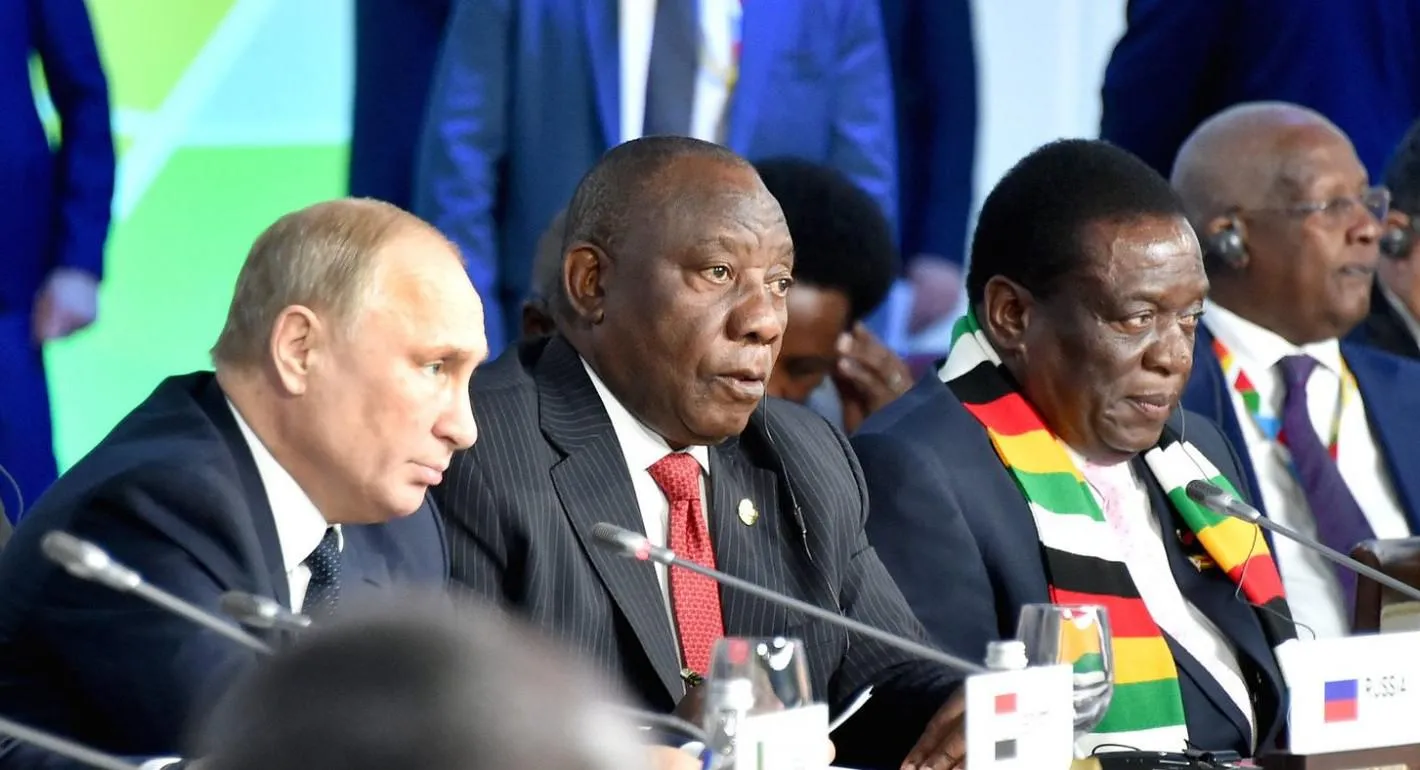
Russia and African countries concluded their third summit in Moscow on October 29 with new cooperation plans and a pledge to expand trade. Representatives of 48 African countries attended the October 28–29 meeting, including 22 heads of state or government, according to Egypt’s State Information Service.
The two-day meeting came as governments across the continent sought to diversify international partnerships, attract investment and strengthen their negotiating positions in the global economy. The summit adopted a final declaration, a Russia–Africa Partnership Forum action plan for 2027–2029 and a declaration on civilian artificial intelligence, according to the Egyptian government’s account.
For Moscow, Africa represents an expanding market for agricultural products, energy technology, industrial equipment and security cooperation. For African governments, closer relations with Russia could provide additional sources of financing, technology and diplomatic support.
However, the long-term significance of the summit will depend on whether political commitments translate into functioning factories, infrastructure projects, employment and measurable economic benefits.
New agreements signal a more structured partnership
One of the most significant developments occurred on October 28, when the African Union Commission and Russia signed an Action Plan covering the period from 2027 to 2029.
The agreement was signed by African Union Commission Chairperson Mahmoud Ali Youssouf and Russian Foreign Minister Sergey Lavrov.
According to the African Union's official announcement, the document identifies 19 areas of cooperation, including trade, investment, agriculture, energy, artificial intelligence, cybersecurity, education, healthcare and transport infrastructure.
The agreement also includes cooperation on conflict prevention, counterterrorism and the development of early-warning systems.
A separate Action Plan was signed between Russia and the Southern African Development Community (SADC). It covers industrialisation, mining, agriculture, technology, transport and regional economic integration.
These agreements represent a shift towards institutional cooperation involving African regional organisations rather than relying exclusively on bilateral negotiations with individual governments.
Nevertheless, the African Union's Action Plan is a cooperation framework and does not create legally binding international obligations. Its economic significance will depend on subsequent financing arrangements, commercial contracts and implementation.
Russia wants to double trade with Africa
Trade is one of the clearest indicators of the expanding relationship.
According to figures presented by Russian officials during the summit, trade between Russia and African countries exceeded $27 billion in 2025.
Moscow has set a new ambition of increasing annual trade to more than $50 billion.
Reaching that target would require an increase of approximately 85% from the current level.
Russia is already an important supplier of agricultural products to several African markets.
President Vladimir Putin stated that Russian grain deliveries to African countries exceeded 18 million metric tons in 2025. Another 13 million metric tons were supplied during the first nine months of 2026.
Russian mineral fertiliser exports to Africa reached approximately 1.5 million metric tons in 2025 and exceeded 2.2 million metric tons during 2026, according to figures presented at the summit.
These supplies have direct economic implications.
Grain imports help countries meet domestic food demand, while fertiliser availability affects agricultural productivity, input costs and ultimately food prices.
For countries experiencing population growth, climate-related agricultural disruptions or insufficient domestic grain production, reliable supply contracts can support food security.
However, long-term dependence on imported agricultural products also presents risks. Exchange-rate fluctuations, shipping costs and disruptions to international payments can increase domestic prices.
African governments therefore have an incentive to negotiate technology transfers, agricultural equipment investments and local production alongside commodity import agreements.
Africa is seeking investment, not just imported goods
One of the central questions surrounding the partnership is whether Russia can expand its role beyond commodity trading and defence cooperation.
African economies need investment in electricity generation, transport infrastructure, industrial processing and manufacturing.
These sectors determine how much economic value remains within individual countries.
For example, exporting unprocessed minerals generates revenue, but domestic refining and manufacturing can create additional employment, support local suppliers and expand the tax base.
African leaders have increasingly emphasised this distinction during international investment negotiations.
At the Moscow summit, representatives from several countries highlighted the need for technology transfer, industrialisation and local employment.
Kenyan President William Ruto called for investment that would lead to operational projects, factories and jobs, while encouraging Russian companies to establish production facilities in Kenya.
This approach reflects a broader African economic priority: international partnerships should support domestic industries rather than reinforce dependence on raw-material exports.
Russia has indicated its willingness to participate in industrial, energy and infrastructure projects, including agricultural processing and logistics.
The commercial challenge is financing.
Large infrastructure developments require long-term capital, predictable repayment arrangements, political-risk management and access to international financial services.
Western sanctions affecting Russia create additional complications for some payment channels, insurance arrangements and cross-border transactions.
Alternative settlement mechanisms could reduce certain obstacles, but they would not automatically eliminate financing costs or sanctions-related risks.
Russia remains a smaller economic partner than China and Europe
Despite stronger diplomatic engagement, Russia's economic presence in Africa remains comparatively limited.
According to figures discussed by the international affairs institute Chatham House, Russia–Africa trade was approximately $27 billion in 2025.
By comparison, China's trade with African countries reached approximately $348 billion in 2025, according to Chatham House. Separately, the Council of the European Union reports nearly €355 billion in EU–Africa goods trade in 2024. The EU figure is for a different year and currency.
Russia's trade volume was therefore equivalent to less than 8% of China's.
The $27 billion figure also fell short of the $40 billion trade target announced by President Vladimir Putin in 2019, according to Chatham House. These trade figures do not measure investment or political influence.
This difference illustrates the scale of the challenge facing Moscow.
China has developed extensive commercial relationships covering manufacturing, construction, telecommunications, consumer goods and infrastructure finance. European countries maintain substantial investment, banking and trade relationships across the continent.
Russia has competitive capabilities in particular sectors, including nuclear technology, agricultural commodities, fertilisers and certain industrial applications.
However, becoming a much larger economic partner would require broader private-sector participation, stronger financial infrastructure and sustained investment.
For African governments, the economic advantage may lie in maintaining several competing partnerships rather than becoming dependent on any single foreign power.
Energy, technology and education offer longer-term opportunities
Energy cooperation is another priority.
Several African countries face electricity shortages that constrain industrial production, raise operating costs and discourage investment.
Russia has promoted cooperation in nuclear energy and electricity infrastructure, including projects involving its state nuclear company Rosatom.
Egypt's El Dabaa nuclear power plant is one prominent example of Russian involvement in African energy infrastructure, although the project remains under construction.
Other countries have explored nuclear cooperation agreements, but moving from preliminary agreements to operational power facilities requires substantial investment, regulation and long construction periods.
Digital technology represents another potential area of cooperation.
The 2027–2029 African Union–Russia Action Plan includes artificial intelligence, cybersecurity, digital transformation and space technology.
Practical applications could include digital public services, agricultural monitoring, infrastructure management and systems for identifying public-health or environmental risks.
Education may also help sustain cooperation. According to figures cited by Russian officials, nearly 40,000 students from African countries are studying at Russian universities.
Graduates with technical, medical and engineering qualifications could contribute to domestic development if training programmes align with African labour-market requirements.
Security cooperation remains politically sensitive
Security is an established component of Russia's relationships with several African governments.
Moscow says it has military and military-technical cooperation agreements with 45 African countries.
In parts of the Sahel, governments have expanded cooperation with Russian security personnel following deteriorating relationships with traditional Western partners.
Supporters of these arrangements argue that they provide governments with alternative sources of training, equipment and assistance against armed groups.
Critics question the effectiveness, transparency and accountability of some Russian-backed security operations.
Continued insurgent violence in parts of the Sahel demonstrates that foreign military partnerships do not automatically produce lasting stability.
For African governments, security arrangements also carry economic consequences. Persistent instability discourages investment, damages infrastructure and raises transport and insurance costs.
The ultimate assessment of security cooperation should therefore consider civilian protection, the restoration of state services and improvements in economic activity alongside military objectives.
What happens after the Moscow summit?
The third Russia–Africa Summit demonstrates that both sides are willing to maintain and expand their diplomatic engagement.
The agreements signed with the African Union and SADC provide additional frameworks for negotiations over the next three years.
Yet diplomatic participation and signed documents are only preliminary indicators of progress.
The more meaningful measures will be the value of completed investments, operational industrial projects, growth in bilateral trade, local jobs created and the reliability of technology and infrastructure partnerships.
African governments also have an opportunity to negotiate more favourable terms as international competition for access to the continent's markets and resources continues.
The central question is whether Russia's expanding diplomatic presence can generate economic outcomes that African businesses and households can measure.
If the new cooperation frameworks result in financed infrastructure, local manufacturing, improved agricultural productivity and technology transfer, the partnership could develop a stronger economic foundation.
If implementation remains limited, the relationship may continue to be more significant politically than commercially.
The summit has established new diplomatic commitments. Their economic value will be determined by what Russia and its African partners deliver between 2027 and 2029.
Discussion 0
Sign in or register to leave a comment.