Africa Weekly News Digest | October 30, 2026 | Politics, Business, Energy, Security and Development
South Africa discovered that its economy was almost 5% larger than previously estimated. Tanzania announced its first major natural gas discovery in more than a decade. Ghana reached an agreement to develop new bauxite and alumina projects, while Nigeria's Dangote refinery completed a major public share offering.
At the same time, armed conflict forced tens of thousands of Ethiopians across the Kenyan border, Sudan faced escalating famine risks, and the Democratic Republic of the Congo continued battling an Ebola outbreak that has exceeded 10,000 confirmed cases.
These developments reveal a continent facing two distinct pressures: the need to accelerate industrial development and the growing economic cost of insecurity, disease and climate disruption.
Here are the major African developments reported between October 26 and October 30, 2026.
1. South Africa's Economy Is 4.9% Larger Than Previously Estimated
October 29 | South Africa | Economy
South Africa's national statistics agency revised the country's gross domestic product upward by 4.9% following an extensive review of economic activity.
According to Statistics South Africa, the revised value of GDP for 2022 reached approximately 6.99 trillion rand, compared with the previous estimate of 6.67 trillion rand.
The agency changed the base year used in its GDP calculations from 2015 to 2022 and incorporated improved estimates of informal economic activities, mining, financial services and other industries.
The revisions increased the measured size of all ten economic sectors.
Why it matters: A larger GDP denominator changes economic indicators such as the public debt-to-GDP ratio, potentially affecting how investors and creditors assess South Africa's financial position.
However, the revision does not mean the country suddenly produced 4.9% more goods and services. It means economic activity that already existed is now being measured more comprehensively.
The figures also reinforce South Africa's position ahead of Nigeria in nominal GDP, although exchange rates and statistical methodologies influence international comparisons.
Source: Statistics South Africa
2. Senegal Faces Another Credit Downgrade as Debt Negotiations Continue
October 27–29 | Senegal | Public Finance
Senegal's efforts to restore fiscal stability encountered another obstacle this week.
On October 29, Moody's downgraded the country's foreign-currency ratings to Ca from Caa2, reflecting concerns about potential losses for private external creditors during debt restructuring.
The downgrade followed parliamentary discussions over an amended national budget intended to support negotiations with the International Monetary Fund.
The revised budget reduces Senegal's projected 2026 economic growth to 2.7%, compared with approximately 5% previously, while increasing the expected fiscal deficit to 7.6% of GDP from 5.4%.
Senegal's debt problems intensified after previously unreported liabilities were discovered, undermining confidence in earlier government financial statistics.
Why it matters: A weaker credit rating can increase borrowing costs and restrict access to international capital markets.
Debt restructuring may reduce repayment pressure, but prolonged negotiations could delay infrastructure investment and complicate government spending plans.
The immediate question is whether Senegal can reach an agreement with creditors and the IMF while maintaining essential public services.
Source: Reuters — Senegal's Budget Negotiations
3. Nigeria's Dangote Refinery Completes Public Share Offering
October 27 | Nigeria | Business and Capital Markets
Dangote Petroleum Refinery closed its public share offering on October 27 after an application period that began on September 14.
The offering price was set at 525 Nigerian naira per share. According to the company's official investor website, applications are now undergoing verification and allocation procedures.
The refinery's management described the offering as an initiative to expand investor participation in one of Africa's major industrial enterprises.
The company has not yet released final verified allocation results, so the number of successful investors and the final subscription outcome remain to be confirmed.
Why it matters: Public participation in industrial assets could help deepen African capital markets and provide investors with greater exposure to domestic manufacturing.
For Nigeria, the broader economic question is whether increased refining capacity can reduce dependence on imported petroleum products and improve the country's fuel trade balance.
Investors must still evaluate operational profitability, debt, foreign-exchange exposure and the refinery's ability to sustain production.
Source: Dangote Petroleum Refinery — Official IPO Information
4. Tanzania Announces Its First Major Gas Discovery in More Than a Decade
October 27–29 | Tanzania | Energy
Tanzania announced the discovery of an estimated 223 billion cubic feet of natural gas at the Kasa-1X ST2 exploration well in the Mnazi Bay area of Mtwara Region.
The project involves the state-owned Tanzania Petroleum Development Corporation and French energy company Maurel & Prom.
It represents Tanzania's first reported major natural gas discovery since 2015.
However, there is an important distinction between the government's estimate and the operator's technical assessment.
Maurel & Prom reported a preliminary estimate of approximately 200 billion cubic feet. Further appraisal is necessary before the quantity can be treated as certified recoverable reserves.
The country also awarded four petroleum exploration licences to its national petroleum corporation on October 28.
Why it matters: Additional domestic gas production could support electricity generation, industrial manufacturing and transport.
Natural gas already supplies a substantial proportion of Tanzania's electricity production. Expanding supply could reduce the need for expensive alternative fuels and support industrial development.
The commercial value of the discovery will depend on recoverable volumes, production costs, transport infrastructure and long-term demand.
Sources: Reuters and The Citizen
5. Ghana Signs Agreement for Major Bauxite and Alumina Projects
October 29 | Ghana | Mining and Investment
Ghana's state-owned Ghana Integrated Aluminium Development Corporation reached an agreement with Russian aluminium producer Rusal to develop mining and processing operations.
The agreement covers the Nyinahin bauxite deposit, which contains estimated mineral resources exceeding 100 million tonnes.
The proposed projects include:
Annual bauxite mining capacity of up to 5 million tonnes.
An alumina refinery with annual capacity of 1.2 million tonnes.
Two joint ventures with majority ownership by Rusal.
Potential investment in local transport infrastructure and industrial employment.
The agreement was announced during the Russia–Africa Forum in Moscow.
Why it matters: Ghana's objective is to capture more value from its mineral resources by processing bauxite domestically instead of relying primarily on raw-material exports.
A functioning alumina refinery could create demand for local suppliers, transport services, skilled workers and energy infrastructure.
However, the announced capacity represents a development target rather than existing production. Financing, environmental approvals, construction and infrastructure delivery will determine whether those targets are achieved.
The wider diplomatic context of the Moscow meetings is examined in PressHub Africa's earlier report: Russia and Africa Strengthen Relations: New Agreements, Trade Ambitions and the Economic Challenges Ahead.
Source: Rusal — Official Announcement, October 29
6. Up to 50,000 People Flee Ethiopia into Kenya
October 28 | Ethiopia and Kenya | Humanitarian Crisis
The United Nations Refugee Agency warned of growing humanitarian needs along the Ethiopia–Kenya border as fighting near Moyale forced civilians to flee their homes.
According to estimates provided by local authorities and cited by UNHCR, up to 50,000 people had crossed into Kenya since October 22.
The figure remains provisional because registration and verification are continuing.
Many displaced people are women and children. Some are staying with relatives, while others have taken shelter in schools, churches and temporary accommodation.
UNHCR identified food, clean drinking water, sanitation, shelter and medical care as immediate priorities.
The agency mobilised emergency assistance intended initially to support nearly 12,000 people, with plans to increase coverage.
Separately, Ethiopia announced an agreement involving Russian Su-35 fighter aircraft and S-400 air defence systems during the Moscow summit. Prime Minister Abiy Ahmed announced the acquisition of 12 fighter jets, although Russia's arms exporter told Reuters that the first delivered batch consisted of two aircraft.
The military announcement comes amid multiple security challenges, including renewed fighting in northern Ethiopia.
Why it matters: Large-scale displacement increases pressure on Kenyan border communities, local health facilities and food supplies.
The situation also demonstrates how instability within one country can rapidly become a regional humanitarian and economic problem.
Source: UNHCR — October 28 Emergency Update
7. Sudan's Food Crisis Deepens as International Pressure Increases
October 26–28 | Sudan | Conflict and Food Security
Sudan's humanitarian situation deteriorated further as international governments warned that large parts of the population face severe food insecurity.
A joint international statement highlighted estimates that 19.5 million people, approximately 41% of Sudan's population, were experiencing high levels of acute food insecurity.
Around 5 million people were facing emergency levels.
The statement also warned that the number of children suffering from severe acute malnutrition could exceed 825,000 without intervention.
Food insecurity is being driven by armed conflict, displacement, disrupted agricultural production, damaged transport networks and restrictions on humanitarian access.
During the same week, a Sudanese rights group reported that a military drone strike on a market in Nyala, South Darfur, had killed more than 100 people. The casualty figure was attributed to the group and requires independent verification.
Why it matters: The food crisis is increasingly difficult to address through shipments alone.
Even when supplies are available, damaged roads, armed checkpoints, insecure transport routes and restricted access can prevent food from reaching affected communities.
Without improved humanitarian access and sustained funding, additional regions could face famine conditions.
Source: Joint International Statement on Sudan
8. DR Congo's Ebola Outbreak Exceeds 10,000 Confirmed Cases
October 27–29 | Democratic Republic of the Congo | Public Health
The Ebola outbreak in the Democratic Republic of the Congo has become the second-largest on record.
According to the US Centers for Disease Control and Prevention, the DRC had recorded 10,193 confirmed infections and 4,960 confirmed deaths as of October 27.
The outbreak is caused by the Bundibugyo virus.
Cases associated with the broader outbreak have also been identified outside the DRC, including in Kenya and Nigeria.
The spread is particularly difficult to contain in communities affected by armed conflict, limited healthcare infrastructure and population displacement.
Some infections may go undetected because patients cannot access health facilities or because contact tracing is interrupted.
Why it matters: Disease outbreaks impose costs beyond healthcare expenditure.
They can disrupt cross-border trade, labour mobility, education and local commerce. Additional screening and travel restrictions can affect transport connections and business activity.
Containing the outbreak requires timely testing, contact tracing, infection prevention and public cooperation, particularly in insecure areas.
Source: CDC — Ebola Outbreak Situation Update
9. Nigeria Reports at Least 62 Deaths Following Attack in Taraba State
October 27 | Nigeria | Security
Nigerian authorities reported at least 62 deaths following an armed attack on Binnari community in Taraba State on October 23.
The National Emergency Management Agency also reported 52 people injured and thousands displaced.
According to officials, some residents attempted to escape the attackers by entering the Benue River.
The number of fatalities remained subject to revision as recovery operations continued.
The incident reflects the broader security crisis in parts of northern Nigeria, where armed groups have carried out attacks, kidnappings and raids on civilian communities.
Why it matters: Insecurity affects agricultural production, rural transport and access to markets.
Farmers who abandon their land cannot maintain normal production, while transport operators face higher costs and risks.
The long-term economic damage may therefore extend beyond the communities directly attacked.
Source: Associated Press — October 27 Report
10. Gabon Investigates Offshore Oil Rig Disaster
October 26–29 | Gabon | Oil and Gas
Gabon continued rescue and investigation operations following the sinking of Borr Drilling's Prospector 5 offshore drilling rig near Mayumba on October 24.
The platform had 115 people on board.
The company initially reported that 110 were safe and five were unaccounted for.
On October 29, Gabon's navy reported that three bodies had been located during underwater inspections, while two people remained missing.
Preliminary information indicated that the platform lost stability during preparations for drilling after a structural support penetrated the seabed more deeply than expected.
The rig was intended to support BW Energy's offshore operations.
Why it matters: Offshore accidents can delay production schedules, generate significant recovery costs and expose operators to environmental liabilities.
The incident also raises questions about technical inspection, operational safety and emergency preparedness in offshore energy projects.
Source: Reuters — Updated October 29 Report
11. South Africa Deploys 510 Soldiers Amid Anti-Migrant Violence
October 27 | South Africa | Domestic Security
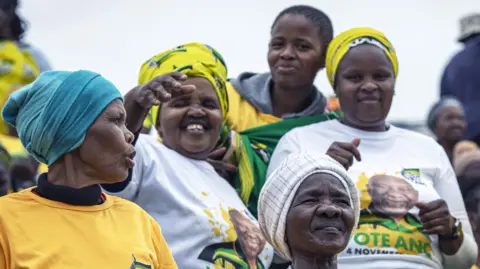
South African President Cyril Ramaphosa authorised the deployment of 510 soldiers to KwaZulu-Natal to assist police following violent anti-migrant protests.
The deployment is expected to cost approximately 34.1 million rand and continue through November 30.
The decision follows incidents involving attacks on foreign nationals, damage to businesses and widespread misinformation about asylum procedures.
The unrest has increased tensions ahead of local government elections scheduled for November 4.
Why it matters: Migration-related unrest affects economic activity in communities where foreign nationals operate shops, restaurants and other small businesses.
Violence can destroy commercial assets, disrupt employment and increase pressure on local policing and public finances.
The challenge for authorities is to address immigration enforcement and public safety while protecting people from unlawful violence.
Source: Reuters — October 27
12. Durban Emerges as South Africa's Olympic Candidate
October 29 | South Africa | Sport and Infrastructure
South Africa selected Durban as its preferred candidate city for a possible bid to host the 2036 or 2040 Summer Olympic and Paralympic Games.
If successful, the bid would bring the Summer Olympics to Africa for the first time.
The proposal could involve multiple South African cities, with Durban serving as the main host.
The South African Olympic authorities are expected to present the initiative to the International Olympic Committee in November.
However, hosting costs have not yet been established.
Durban previously secured the right to host the 2022 Commonwealth Games but lost that status after failing to meet required commitments.
Why it matters: Major sporting events can accelerate infrastructure development and tourism investment, but their financial results depend on realistic budgets and the long-term use of facilities.
The primary economic test for the proposed Olympics would be whether new infrastructure continues generating value after the competition ends.
Source: Reuters — Durban Olympic Bid
13. Powerful El Niño Raises New Climate Risks for African Economies
October 26 | Africa | Climate and Agriculture
The World Meteorological Organization warned that the developing El Niño event could reach exceptional strength toward the end of 2026.
The organisation's updated outlook indicated that tropical Pacific sea-surface temperature anomalies could reach approximately 3.8°C above average during November 2026 to January 2027.
For Africa, the forecast suggests different risks across different regions.
Parts of East Africa are more likely to experience above-normal rainfall, increasing the threat of flooding.
Southern Africa faces a greater risk of below-normal rainfall, potentially affecting agricultural production, water resources and rural livelihoods.
These are seasonal probabilities rather than forecasts of individual disasters.
Why it matters: Weather disruptions affect food prices through several mechanisms.
Drought reduces harvests and livestock productivity. Flooding can damage crops, roads and storage facilities. Both can increase transport costs and reduce the availability of agricultural goods.
For countries already facing food insecurity or substantial import bills, the additional pressure could be significant.
Source: World Meteorological Organization — October 26 Outlook
What These Developments Mean for Africa
The week's developments reveal three economic and political trends that deserve closer attention.
First, African countries are placing greater emphasis on industrial production. Ghana's aluminium projects, Tanzania's gas discovery and Nigeria's refinery share offering demonstrate efforts to expand domestic processing, energy supply and investment opportunities. Whether these initiatives succeed will depend on financing, infrastructure and operational execution.
Second, humanitarian and security problems continue to impose measurable economic costs. Displacement in Ethiopia, food insecurity in Sudan, violence in Nigeria and the Ebola outbreak in the DRC affect employment, government budgets, transport and regional trade.
Third, economic statistics and financial credibility are becoming increasingly consequential. South Africa's GDP revision and Senegal's debt negotiations show how measurement, transparency and government financial management influence investment decisions.
The central issue for the coming months is whether infrastructure investment and industrial development can progress despite political instability, public-health risks and increasingly unpredictable weather conditions.
Africa has substantial energy resources, mineral deposits, expanding consumer markets and a growing labour force. Converting those advantages into sustained economic progress will require investment projects that reach production, public institutions capable of maintaining stability and stronger regional responses to shared risks.
PressHub Africa Weekly Digest. Information verified against official releases and international reporting available as of October 30, 2026. Rapidly changing casualty, displacement and disease figures may be revised.
Discussion 0
Sign in or register to leave a comment.